Understanding Shortage Allowances
read more

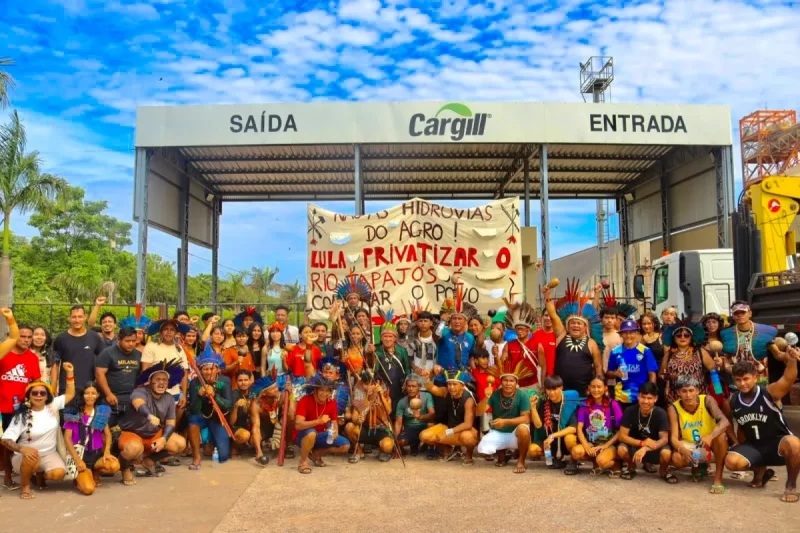
Federal government repeals controversial waterway decree following indigenous protests and forceful occupation, restoring operations at the trader’s private port facility amid heightened tensions
The high-stakes escalation in indigenous protests at the Cargill private grain terminal in the Port of Santarem reached a resolution on 23 February 2026. Following more than a month of industrial action and forceful full-scale occupation over the weekend that completely halted operations, the federal government announced the revocation of Decree 12,600/2025, which had incited grievances among Indigenous groups.
The unrest began on 22 January 2026, targeting one of Brazil’s critical logistical hubs within the Northern Arc corridor. Located at the confluence of the Tapajós River and the Amazon River in the heart of the Amazon, the Cargill terminal in Santarém handles about 70% of the region’s grain exports, processing approximately 5.5 million metric tons of soya beans and maize (corn) annually.
This private port facility operates under a port lease agreement within the public Port of Santarém, managed by the state-owned Dock Company of Pará (CDP). It serves as a crucial conduit for grains and oilseeds produced in the North and Midwest regions, which arrive via the “Soya Bean Highway” (BR-163) and depart on barge convoys from Miritituba (Itaituba) stations downriver on the Tapajós to the Cargill terminal.
The protests were triggered by Federal Decree 12,600/2025, signed by the President in September 2025. This legislation incorporates the Amazon’s Tapajós, Madeira, and Tocantins waterways into the National Privatisation Programme (PND). The decree proposed studies to grant private concessions for river infrastructure projects, including the implementation of modern channel signalling and advanced vessel traffic management systems, as well as intensified dredging at critical points of waterways (between Porto Velho and Itacoatiara on the Madeira, Belem and Peixe on the Tocantins, and Itaituba and Santarem on the Tapajos) to reduce the effects of the Amazon drought season.

While the MPor advocates that waterborne transport is the most sustainable mode –emitting nearly 70% fewer greenhouse gases (GHG) than road transport—indigenous leaders strongly opposed the measure. They asserted it violated their rights under ILO Convention 169, which mandates free, prior, and informed consent for projects affecting indigenous lands. They perceived the new legislation as an attempt to privatise their ancestral rivers without proper consultation. It is estimated that around 7,000 indigenous people from 14 ethnic groups live in the Lower Tapajos region, according to the Tapajos Arapiuns Indigenous Council (CITA), which represents the peoples of the region.
Following the occupation of the terminal’s internal perimeter on 21 February, including administrative buildings, the situation deteriorated sharply. The standoff reached a turning point on 23 February 2026, when government officials announced the repeal of Decree 12,600/2025, with formal publication in the Official Gazette anticipated this week. Currently, about 18 bulk carriers are queued to load nearly 700,000 metric tons of soya beans at that facility through March, with many awaiting their turn at anchor in Santarém and Macapá, the entry point for upriver clearance.
With the immediate crisis resolved, the security risk to the Port of Santarém is expected to subside. However, ship operators and masters calling at Amazon ports are advised to maintain vigilance and adopt safety precautions, given the operational disruptions and potential for residual tension. Enhancing shipboard security is recommended, especially considering the Navigation Hazards and Armed Robberies in the Amazon.
We are closely monitoring this evolving situation and will provide further updates via this website should there be significant developments impacting carriers operating in the region.
Please read our disclaimer.
Related topics:
Rua Barão de Cotegipe, 443 - Sala 610 - 96200-290 - Rio Grande/RS - Brazil
Telephone +55 53 3233 1500
proinde.riogrande@proinde.com.br
Rua Itororó, 3 - 3rd floor
11010-071 - Santos, SP - Brazil
Telephone +55 13 4009 9550
proinde@proinde.com.br
Av. Rio Branco, 45 - sala 2402
20090-003 - Rio de Janeiro, RJ - Brazil
Telephone +55 21 2253 6145
proinde.rio@proinde.com.br
Rua Professor Elpidio Pimentel, 320 sala 401 - 29065-060 – Vitoria, ES – Brazil
Telephone: +55 27 3337 1178
proinde.vitoria@proinde.com.br
Rua Miguel Calmon, 19 - sala 702 - 40015-010 – Salvador, BA – Brazil
Telephone: +55 71 3242 3384
proinde.salvador@proinde.com.br
Av. Visconde de Jequitinhonha, 209 - sala 402 - 51021-190 - Recife, PE - Brazil
Telephone +55 81 3328 6414
proinde.recife@proinde.com.br
Rua Osvaldo Cruz, 01, Sala 1408
60125-150 – Fortaleza-CE – Brazil
Telephone +55 85 3099 4068
proinde.fortaleza@proinde.com.br
Tv. Joaquim Furtado, Quadra 314, Lote 01, Sala 206 - 68447-000 – Barcarena, PA – Brazil
Telephone +55 91 99393 4252
proinde.belem@proinde.com.br
Av. Dr. Theomario Pinto da Costa, 811 - sala 204 - 69050-055 - Manaus, AM - Brazil
Telephone +55 92 3307-0653
proinde.manaus@proinde.com.br
Rua dos Azulões, Sala 111 - Edifício Office Tower - 65075-060 - São Luis, MA - Brazil
Telephone +55 98 99101-2939
proinde.belem@proinde.com.br