Understanding Shortage Allowances
read more

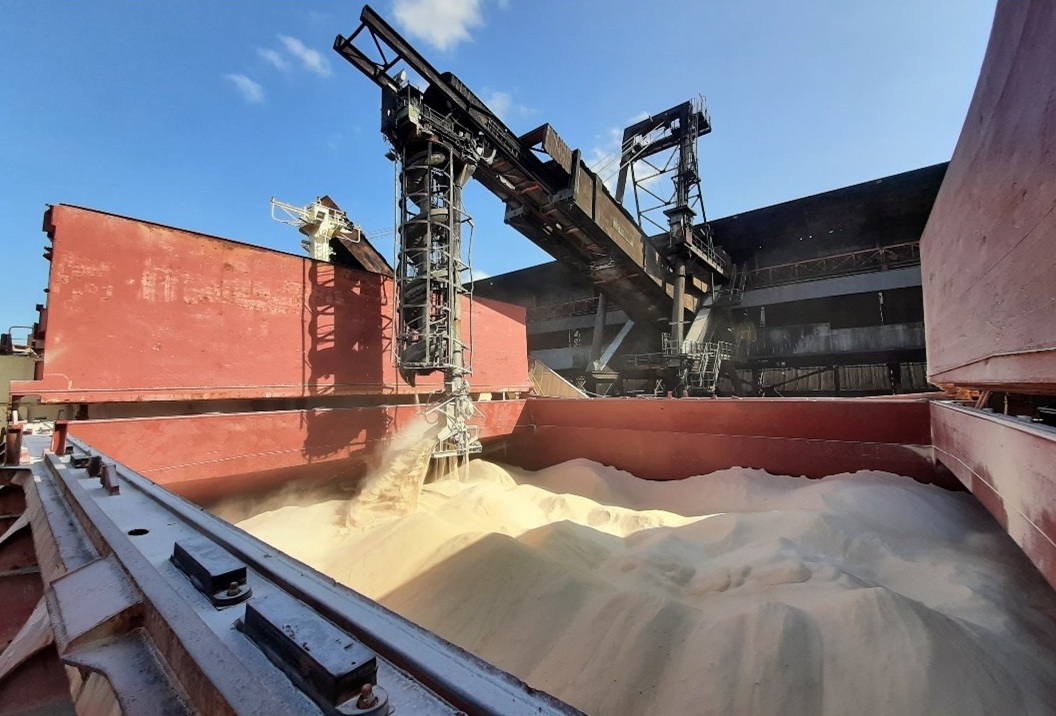
In the last quarter of 2025, three bulk carriers arriving from Santos with sugar were intercepted by Nigerian law enforcement with cocaine hidden on board, resulting in the detention of the ships and arrest of their crews
Recent data from Brazil’s Foreign Trade Secretariat (Secex) indicates a 12% decrease in sugar exports, with volumes declining from 38.2 million metric tons (mmt) in 2024 to 33.8 mmt last year. Correspondingly, FOB revenues fell from USD 18.6 billion to USD 14 billion, primarily due to a 20% drop in international prices for the commodity.
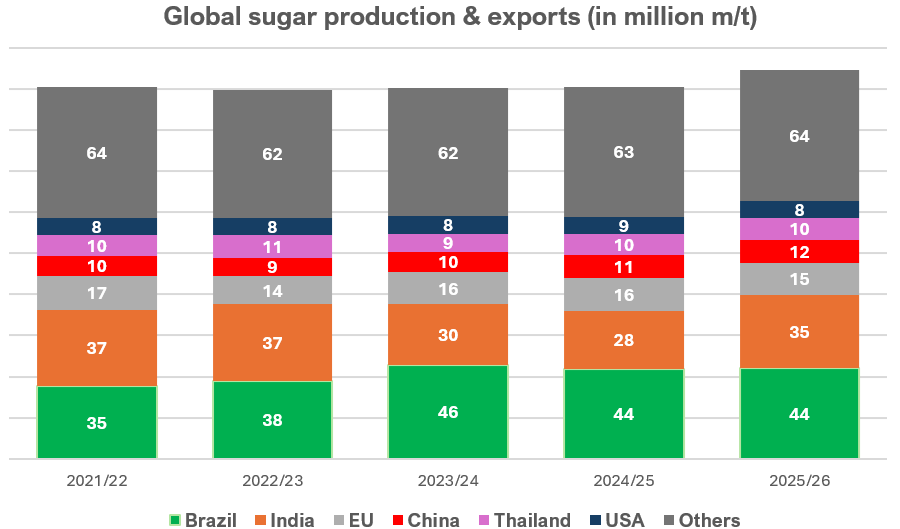
Despite this temporary decline, Brazil comfortably retains its position as the world’s largest producer and exporter of sugar, a status it is expected to maintain in the upcoming seasons. The country’s abundant sugarcane harvest, coupled with a favourable ethanol-sugar mix, is anticipated to yield the second-largest output and export levels during the 2025/26 cycle, only marginally behind 2023/24.
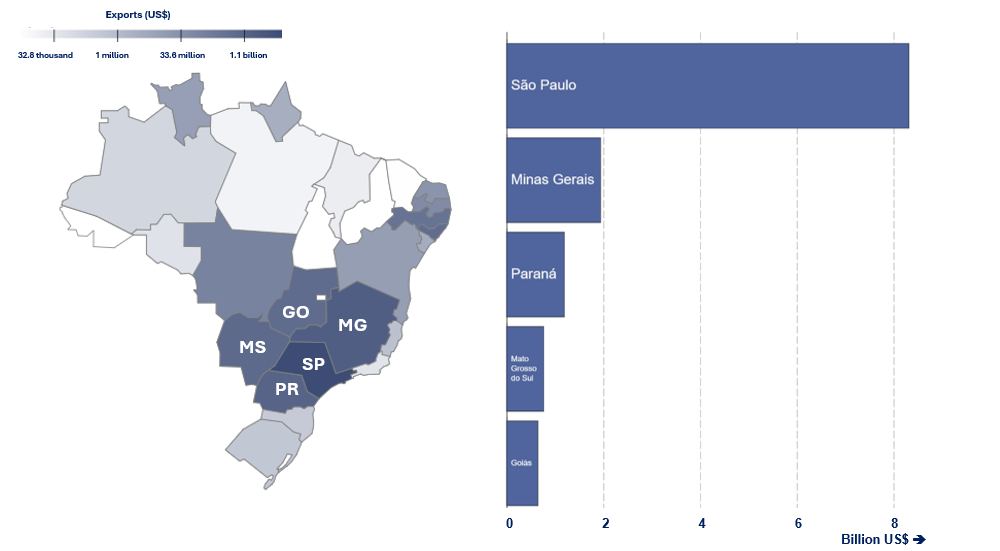
The majority of sugar shipped from Brazilian ports originates from the centre-south states. The state of São Paulo (SP) accounts for a dominant 60% of the national output, followed by Minas Gerais (MG) with a 14% share, and Paraná (PR) with an 8.5% share. Sugar produced in São Paulo, Minas Gerais, Goiás (GO), and in part of Mato Grosso do Sul (MS) is typically exported through Santos, Latin America’s largest and busiest port, while that from the state of Paraná is shipped through the ports of Paranaguá and Antonina.
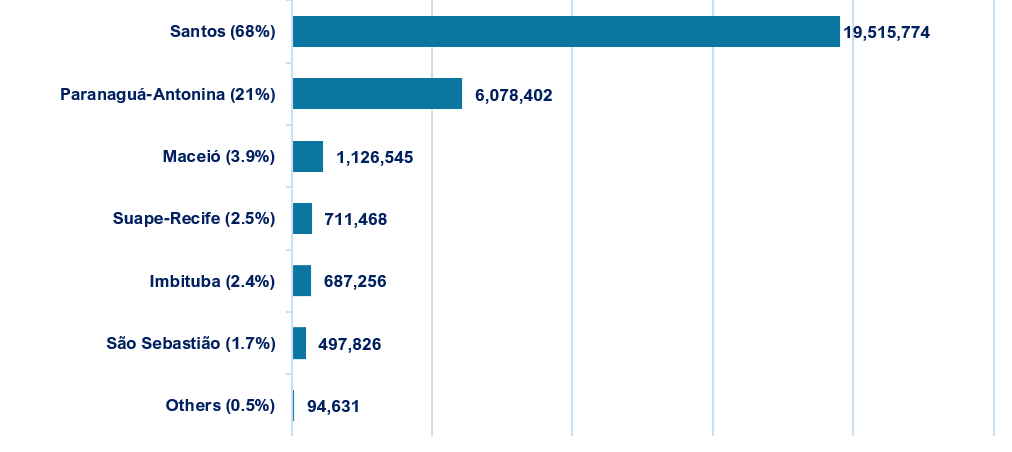
In 2025, sugar ranked fourth among solid bulk exports, trailing only iron ore, soya beans, and maize (corn). From January to November last year, the Brazilian ports shipped approximately 27 mmt of sugar in bulk, according to the National Agency of Waterway Transport (ANTAQ). Notably, Santos accounted for 68% of last year’s sugar exports, shipping around 19.5 mmt of the product. The Paranagua/Antonina port complex followed with 6 mmt (21% of shipments), while Maceió on the Northeast coast contributed 1.1 mmt (4%).
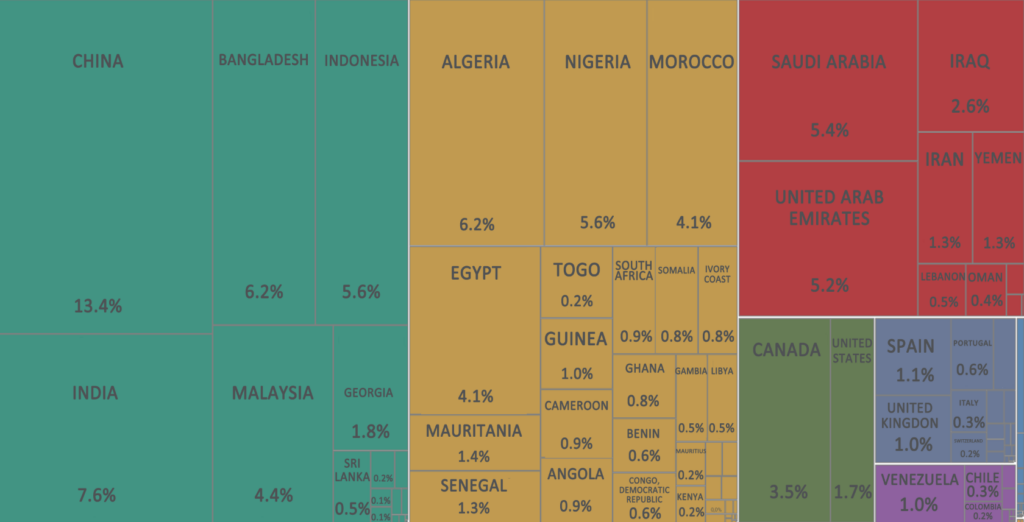
Key destination countries included China, receiving 18% of Brazilian sugar shipments, India (8.8%), Bangladesh (6.8%), Indonesia (6.7%), and the United Arab Emirates (6.3%).
In 2025, Brazil sold sugar to 150 countries globally, with 37 of those in Africa. The leading importers in that continent included Algeria (6.2% of shipments), Nigeria (4.7%), Egypt (4.1%), and Morocco (4.1%) – notably, nearly one-third of all commodities exported from Brazil to Africa comprised sugar in bulk.
Nigeria emerged as the largest importer of Brazilian sugar in West Africa. In 2025, 66% of all its imports from Brazil consisted of this commodity, followed by oil and oil products (11%), and soya beans (4%). Most of the sugar shipments to Nigeria originated from the port of Santos on the coast of São Paulo, known for its impressive export throughput and relatively short transatlantic crossing to West Africa.
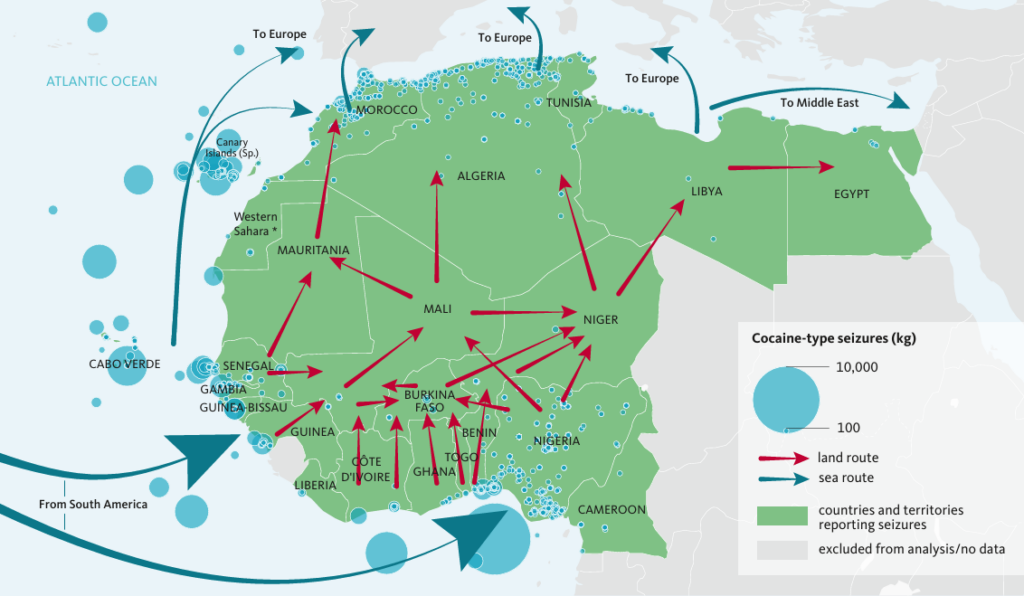
For decades, West African nations have served as key transhipment points for cocaine smuggled across the East Coast of South America to the profitable European consumer market. Drug trafficking between these continents has employed various methods, including drug air couriers (drug mules) who carry small parcels on commercial flights, as well as larger quantities transported on cargo vessels, where drugs are concealed within shipping containers and general cargo.
Although Brazil does not produce cocaine, its well-developed transportation infrastructure — comprising roads, seaports, and airports — is unrivalled by its South American neighbours, establishing it as a significant logistic hub for the transhipment of illicit drugs. Brazil shares extensive, largely unguarded borders in the Amazon with the three largest cocaine-producing countries: Bolivia, Colombia, and Peru. To the south, it borders Paraguay, another key drug transit point in South America.
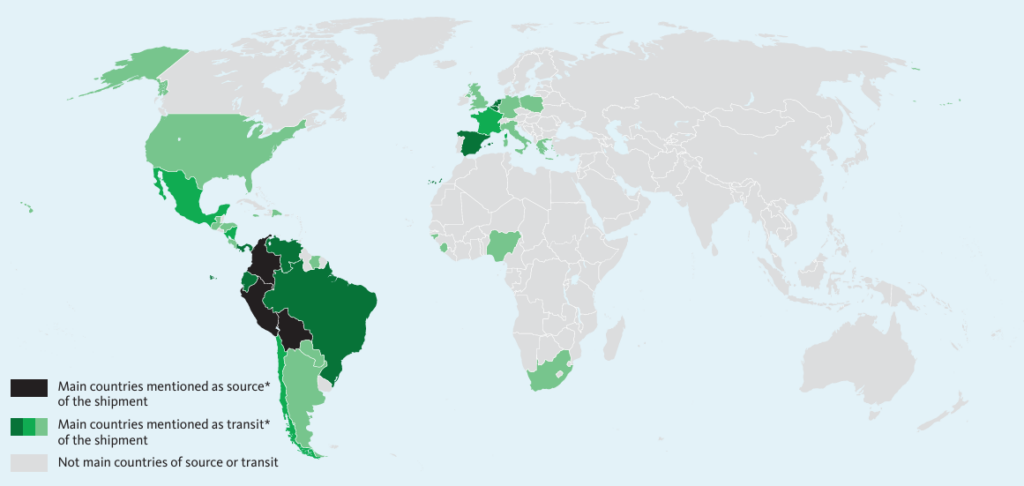
Rising consumer demand for cocaine has fueled a surge in production across Latin America, prompting international traffickers to adapt their strategies for transporting even larger volumes of cocaine to Europe. This adaptation includes exploiting vulnerabilities in Brazilian and West African port security to facilitate shipments originating from Brazil’s western borders. This strategy allows for more efficient transport to Europe, significantly reducing the risks of detection. Since at least 2019, countries such as Nigeria, Senegal, Ghana, and Sierra Leone have consistently ranked among the top destinations for seizures of cocaine transhipped through Brazil.
The Primeiro Comando da Capital – PCC (Capital First Command) is Brazil’s most powerful crime syndicate, originating in the São Paulo prison system in the 1990s. Initially formed to combat prisoner abuse, it has evolved into a major player in international cocaine trafficking, leveraging Brazil’s strategic location.
The PCC has infiltrated various sectors of society, including civil, business, and political spheres, and maintains global connections with other organised crime groups. It is the only Brazilian gang currently designated by the U.S. Department of the Treasury for its involvement in illicit drug trafficking. The PCC controls a significant portion of the country’s maritime trafficking routes, particularly between Santos and West African ports. Reports indicate that the PCC has forged alliances with international criminal networks, including the Italian ’Ndrangheta mafia, Nigerian trafficking groups, and others.
In the wake of COVID-19, criminal organisations such as the PCC have developed innovative strategies to sustain the shipment of increasing quantities of drugs, particularly cocaine. They employ sophisticated and less conspicuous techniques and routes, often enlisting skilled professionals, such as divers, on demand. These methods have evolved over time, incorporating lessons learned during the pandemic, which has allowed traffickers to adjust to changing circumstances and maintain their lucrative operations effectively.
While general cargo and containerships have traditionally been the primary vessels targeted for transatlantic drug smuggling, bulk carriers loading grains and sugar for Europe and Africa have increasingly been exploited by traffickers to transport cocaine overseas, often without the knowledge or complicity of the shipping companies or crews involved.
Since 2021, Brazilian and Nigerian authorities intercepted at least a dozen bulk carriers loaded with bulk sugar either before their departure from Santos or upon arrival at Apapa seaport in Lagos. The amount of drugs seized varied significantly, ranging from a few kilograms to over 100 kg. In most instances, waterproof drug packages were concealed within void spaces on the main deck, buried beneath the bulk sugar cargo, or hidden below the waterline inside the ships’ sea chests.
Ships discovered with drugs on board were arrested, and their crews detained. In one case, ten crew members of a bulk carrier transporting sugar from Santos to Lagos had been held in Nigeria since October 2021 on cocaine-trafficking charges. They were finally released in May 2025. Their return to their home country followed a plea bargaining agreement with Nigeria’s National Drug Law Enforcement Agency (NDLEA), which resulted in reduced charges and non-custodial sentences. The crew paid a fine of Naira 1,000,000 (approximately USD 700) and restitution payments totalling USD 360,000, both covered by the shipping company. Additionally, a USD 4 million fine imposed on the vessel was settled by the ship’s insurers. Throughout the process, the crew maintained their innocence.
The NDLEA performed significant intelligence-led operations throughout last year, primarily in Lagos. In the last few weeks of 2025, the Nigerian drug enforcement agency, either independently or in cooperation with the Nigeria Customs Service (NCS) and other authorities, seized three cocaine shipments concealed in bulk carriers arriving with sugar loaded at Santos.
These recent incidents highlight the increasing use of the Brazil-West Africa maritime route for smuggling drugs into Nigeria, often facilitating onward distribution to other African countries or Europe. International alliances, such as those formed by the PCC, have played a crucial role in enabling the movement of cocaine through West Africa to Europe, with countries like Nigeria, Côte d’Ivoire, and Ghana serving as key transit points.
The intricate relationship between Brazil’s bulk exports and the West African cocaine trade underscores the complexities and challenges posed by the global illicit drug market. Despite a relative decline in sugar shipments amid fluctuating international prices, Brazil maintains its status as a leading exporter to West African countries, which inadvertently presents opportunities for traffickers to exploit legitimate shipping routes and infrastructures.
The PCC’s transnational expansion has positioned it as one of the world’s most complex criminal organisations, exerting significant influence over the global cocaine trade. Its collaborative efforts with other criminal networks and a robust regulatory framework have facilitated efficient operations across multiple continents. West Africa has emerged as a critical transit point in the cocaine supply chain, with the PCC’s operations having far-reaching implications for global illicit economies.
Our publication, Shipborne Drug Trafficking in Brazil – Practical Guidance, offers recommendations for enhancing drug smuggling prevention and response strategies. It outlines Brazil’s national drug policy and legal framework, detailing the roles of law enforcement agencies and port security organisations. Furthermore, it presents current statistics on cocaine seizures, local trends and regulations, and the latest tactics employed by narcotraffickers to navigate and exploit vulnerabilities in national ports.
Please read our disclaimer.
Related topics:
Rua Barão de Cotegipe, 443 - Sala 610 - 96200-290 - Rio Grande/RS - Brazil
Telephone +55 53 3233 1500
proinde.riogrande@proinde.com.br
Rua Itororó, 3 - 3rd floor
11010-071 - Santos, SP - Brazil
Telephone +55 13 4009 9550
proinde@proinde.com.br
Av. Rio Branco, 45 - sala 2402
20090-003 - Rio de Janeiro, RJ - Brazil
Telephone +55 21 2253 6145
proinde.rio@proinde.com.br
Rua Professor Elpidio Pimentel, 320 sala 401 - 29065-060 – Vitoria, ES – Brazil
Telephone: +55 27 3337 1178
proinde.vitoria@proinde.com.br
Rua Miguel Calmon, 19 - sala 702 - 40015-010 – Salvador, BA – Brazil
Telephone: +55 71 3242 3384
proinde.salvador@proinde.com.br
Av. Visconde de Jequitinhonha, 209 - sala 402 - 51021-190 - Recife, PE - Brazil
Telephone +55 81 3328 6414
proinde.recife@proinde.com.br
Rua Osvaldo Cruz, 01, Sala 1408
60125-150 – Fortaleza-CE – Brazil
Telephone +55 85 3099 4068
proinde.fortaleza@proinde.com.br
Tv. Joaquim Furtado, Quadra 314, Lote 01, Sala 206 - 68447-000 – Barcarena, PA – Brazil
Telephone +55 91 99393 4252
proinde.belem@proinde.com.br
Av. Dr. Theomario Pinto da Costa, 811 - sala 204 - 69050-055 - Manaus, AM - Brazil
Telephone +55 92 3307-0653
proinde.manaus@proinde.com.br
Rua dos Azulões, Sala 111 - Edifício Office Tower - 65075-060 - São Luis, MA - Brazil
Telephone +55 98 99101-2939
proinde.belem@proinde.com.br