Managing bulk cargo shortages in Brazil is challenging due to a complex and inconsistent legal framework. While international trade practices often recognise a standard allowance, Brazilian regulations and judicial precedents vary considerably
Loss and Wastage: “Natural Loss”
Solid bulks inherently face a higher risk of loss compared to other cargo profiles, such as breakbulk or containerised goods. Throughout the entire logistics chain – from origin through pre-loading storage inland and at the port, loading, sea carriage, and unloading – a certain degree of cargo loss, however small, is unavoidable. This is referred to as “natural loss” in legal doctrine and the Customs Regulation. In addition to inherent vice, other factors contributing to cargo loss and wastage include:
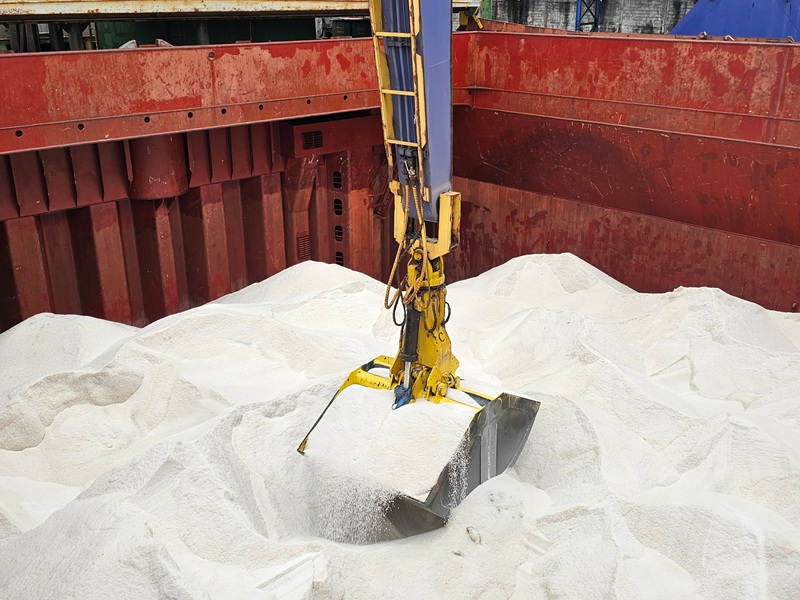
Operational factors: Inefficiencies during loading or discharge can result in loss due to negligent stevedores’ handling, poorly maintained cargo handling machinery, inadequate storage facilities, and quantification inaccuracies (e.g., from draft survey errors or miscalibrated shore scales).
Cargo-specific factors (inherent vice): Certain commodities possess intrinsic properties that render them prone to shrinkage, evaporation, and windage (dusting), with salt and coal being prime examples. While domestic legislation does not explicitly define inherent vice, it is recognised as a legitimate exclusion of liability. The 1850 Commercial Code exempts carriers from liability for goods naturally susceptible to weight fluctuations, provided there is no evidence of poor stowage or carrier negligence. Consequently, cargo owners generally absorb cargo shortage (or damage) due to inherent vice and are liable for freight charges based on the quantities manifested in the bills of lading.
Weather factors: Adverse environmental conditions, such as rain, wind, dew point condensation (cargo sweat or ship’s sweat), high moisture levels, and thermal fluctuations, can exacerbate losses. High winds can cause dusting and spillage of granular or powdery materials onto quaysides, deck surfaces, and overboard. Often, losses are recorded as short deliveries, even when they occur under the port operator’s custody, since cargo is not always weighed immediately upon discharge.
Regulatory Framework and Allowances
In international dry bulk trade, it is customary to accommodate a ‘customary shortage’ (or a ‘trade allowance’) to account for inherent losses, typically around ±0.5% of the manifested weight. Although this threshold is well-established in the oil industry and certain jurisdictions, no international convention formally codifies it for solid bulk cargoes.
The domestic legal framework governing transport contracts offers no specific tolerances, and jurisprudence varies significantly. Generally, most jurisdictions recognise customs allowances (from 1% to 5%) by analogy, while southern states – major importers of fertilisers – such as Santa Catarina and Rio Grande do Sul, adhere to a stricter allowance (0.6%). Paraná appellate courts vary between zero tolerance and a 1% allowance.
Brazilian Legal Landscape
Brazil is not a signatory to international conventions limiting cargo liabilities, such as the Hague-Visby or Hamburg Rules. Liabilities are instead governed by a patchwork of statutes imposing strict liability on carriers:
Civil statutes: Neither the Commercial Code (which remains partly in force for maritime law) nor the 2002 Civil Code specifies tolerances for cargo short deliveries. However, both statutes allow carriers and cargo insurers to exclude liabilities for goods inherently prone to weight fluctuations.
Customs regulations: Federal Decree 6,759/2009 (Customs Regulation) outlines a more defined—albeit tax-related—framework for allowances and penalties related to cargo discrepancies.
Legislative reform: Bill PLS 487/2013, currently being processed in the Senate, proposes to overhaul the ancient Commercial Code and introduce a 5% allowance for bulk cargo shipments, to align maritime law with the upper threshold of customs regulations, exempting carriers from liability for weight variations up to that limit, unless gross negligence is proven.
Source
Rate
Allowance Regime
Customs Allowances
≤ 1%
No duties or fines imposed.
> 1% to ≤ 5%
Import duties due on shortfall; no fines.
> 5%
Import duties due + cumulative fine (BRL 5,000 per percentage point above 5%).
Trade Allowance
± 0.5%
Standard international maritime practice.
Civil Courts (SC/RS)
≤ 0.6%
Maximum shortage typically recognised by state courts in Santa Catarina and Rio Grande do Sul.
Civil Courts (PR)
0% to ≤ 1%
Court decisions usually vary between zero tolerance (strict liability) and ≤ 1%.
Other Civil Courts
1% to 5%
Tolerances vary by stage but are often applied within the Customs Regulation range.
Federal Courts
1% to 5%
Tolerances vary by jurisdiction within the Customs Regulation range.
Insurance Policies
0.5% or 1%
Standard cargo insurance shortage deductibles in line with either trade allowance or customs allowance
Technical & Legal Considerations
Shore scales vs draft surveys dilemma: Discrepancies between scales and draft surveys are a common issue during loading and discharge operations in Brazil, with historical discrepancies typically remaining below 1%. Brazilian courts and customs favour shore scale figures, provided the equipment is certified by INMETRO (the national metrology body). However, this presumption can be rebutted with evidence, such as draft surveys and documented cargo loss or damage during port operations.
Cargo insurance policies: international policies typically recognise that inherent shortages are unavoidable, applying deductibles ranging from 0.5% to 1%.
Claim notice (10-day protest): Under the Civil Code, receivers must notify the carrier of any hidden damage or partial loss within 10 days of delivery. Failure to protest within this timeframe results in the forfeiture of the consignees’ right to claim. Although some courts previously relied solely on the outturn certificates issued by port operators to validate alleged short-landed quantities, recent jurisprudence increasingly dismisses shortage (and damage) claims altogether if the mandatory 10-day notice was not served.
Time bars: Customs authorities have a 5-year window to impose fines. If an administrative tax proceeding remains inactive for 3 consecutive years, the penalty becomes time-barred (interlocutory prescription). The statute of limitations for cargo claims is 1 (one) year from the date of discharge (as per Decree-Law 116/67). This can be judicially extended once for an additional year.
Mitigating Shortage Risks
To effectively mitigate the risks associated with bulk cargo shortages in Brazil and establish a robust legal defence, the following measures are recommended:
Rigorous Operational Monitoring:
Systematic documentation: Crews should meticulously document instances of negligent stevedoring or equipment failure (e.g., spillage from grabs or hoppers) using detailed time logs, high-quality photographs, and video recordings.
Empty hold certification: Upon completion of discharge, the master should obtain an ‘empty hold’ certificate signed by port operators or receivers, along with timed photographs of the empty holds to substantiate total cargo removal.
Enhanced Draft Survey Protocols:
Independent verification: Engage experienced and reliable local draft surveyors, preferably vetted by the local P&I correspondent, at both loading and discharging ports.
Joint readings: Initial and final draft surveys should be performed jointly with all stakeholders and documented in the Statement of Facts (SOF). If adverse conditions hinder accurate readings, the ship officer should record this circumstance in the deck logbook and SOF.
Issuance of Protests: LOPs should be promptly lodged for verified losses or significant discrepancies, typically within the range 0.5%-1%.
Compliance with Brazilian Customs:
Final Checking of the Manifest: for vessels discharging bulk cargo at multiple ports in a single voyage, the customs authority at the last port of discharge is responsible for auditing the total manifested against the actual amount unloaded (outturn) and charging duties for shortfalls exceeding 1%. However, in practice, this final check is often skipped. Consignees frequently clear imported goods before the vessel’s arrival to expedite delivery, paying duties based on the manifested weight, regardless of any shortfalls identified during manifest conciliation. While receivers rarely seek refunds for overpaid taxes, they are often inclined to pursue recovery claims against carriers, at least for any shortfall beyond the 1% threshold.
Weight discrepancy allowances:
0% (1st tier): No penalties.
≤ 1% – natural loss (2nd tier): recognised as “natural loss”, shortfalls within this range are exempt from duties and fines. If a shortfall is between 1% and less than 5%, the carrier is presumed liable for import duties and taxes on the difference, but no fines are imposed.
≥ 5% – over-allowance shortage (3rd tier): Shortfalls over 5% trigger cumulative administrative fines, typically calculated at BRL 5,000 per percentage point (or fraction) above the 5% limit, in addition to the proportional import duties and taxes.
Protective Clauses and Protests:
Clausing of documents: If significant, well-verified discrepancies arise upon loading completion, the master should consider remarking the mate’s receipts and bills of lading, particularly for short loadings above the 1% customs allowance.
Letters of Protest (LOP): LOPs should be issued for verified discrepancies exceeding the trade allowance (±0.5%) up to the customs allowance (1%). For discrepancies above 1%, the master should seek instructions from the Owners and advice from the P&I Club regarding the clausing of the M/Rs and Bs/L.
For comprehensive guidance, insights into the legal framework, and defence strategies on mitigating bulk cargo shortage risks in Brazil, refer to our “Shortage of solid bulk cargoes in Brazil: Practical Guidance”, available for free download.