Northern Arc: Draft Increases and New Safety ...
read more

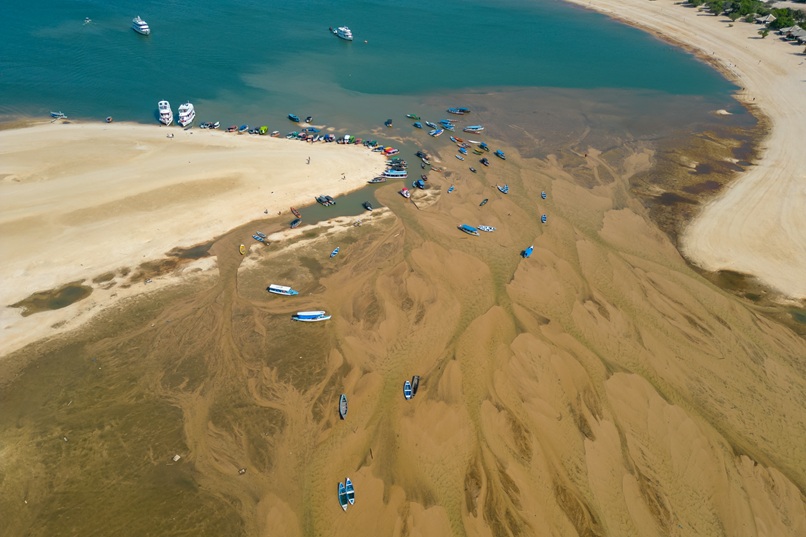
While less severe than in recent years, the 2025 drought in the Amazon still disrupts commercial navigation, particularly along rivers like the Madeira, a crucial artery for barging operations
The Madeira, a major tributary of the Amazon, serves as a primary transport corridor in the North region. Convoys of barges carrying grains, fertilisers, and other commodities in bulk regularly ply the river between barging hubs such as Porto Velho and Humaitá and riverports such as Itacoatiara, Santarém, Vila do Conde (Barcarena), and Santana. Despite sporadic rainfall, the Madeira is experiencing low water levels, forcing convoys to operate with lighter payloads and reduced speeds to prevent groundings and collisions.
Looking ahead, the National Waterway Transport Agency (ANTAQ) has initiated procedures for the concession of a 1,075-kilometre section of the Madeira River, though studies are currently in the preliminary stages.
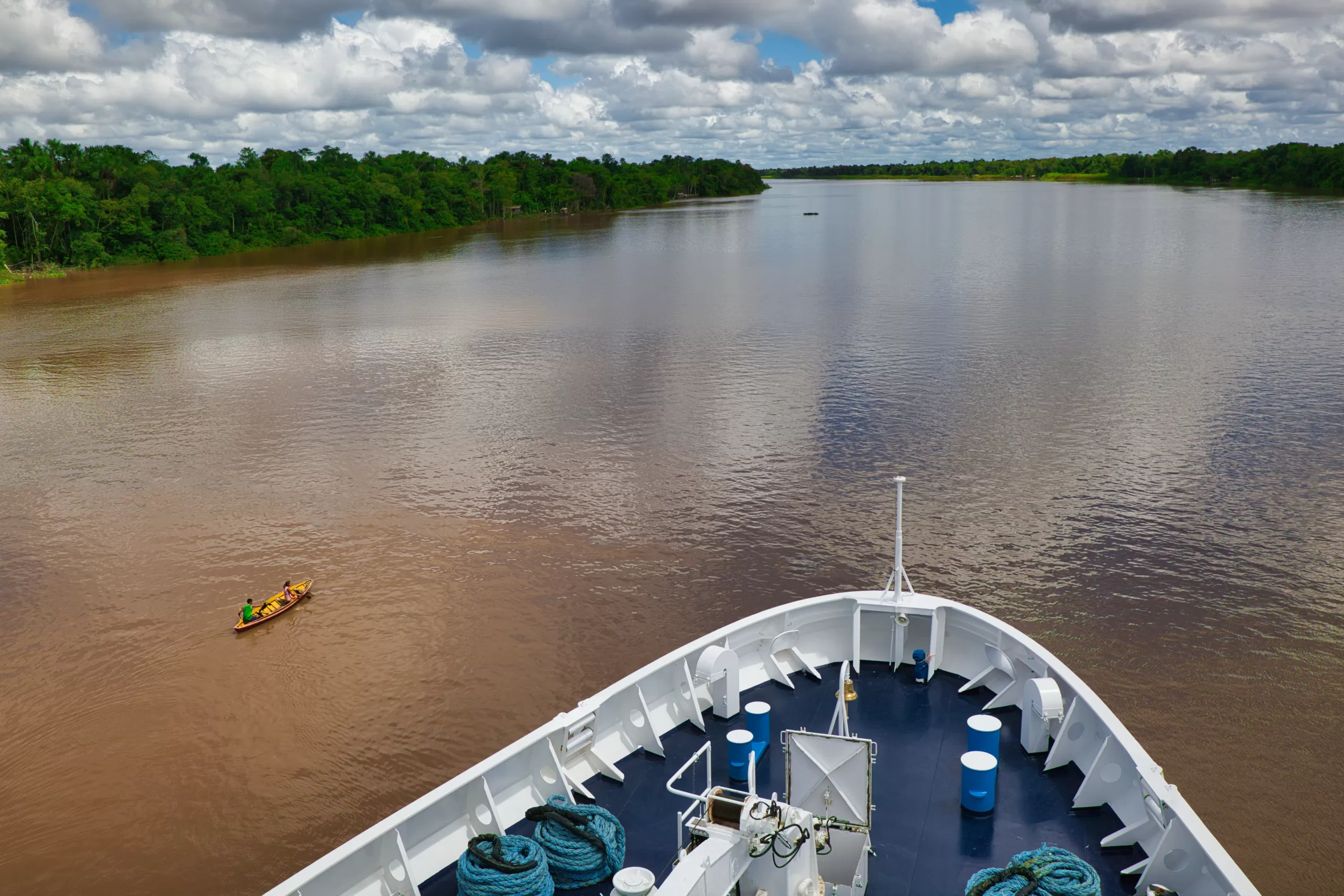
Reduced water levels on the Amazon River have prompted the River Captaincy of the Western Amazon (CFAOC) to issue the following guidelines for pilots, masters, and skippers:
The CFAOC has also released specific guidance for barge convoys, containerships, and ships carrying oil or gas, concerning night navigation, maximum drafts, and underkeel clearance (UKC) requirements for navigation during October and November.
The Union of River Navigation Companies of the State of Amazonas (Sindarma) estimates that the historic droughts in the Amazon and the wider North region have led to an 80% reduction in cargo volume transported since the beginning of this year’s dry season. Sindarma also pointed out significant difficulties in maintaining the flow and supply of essential products and inputs throughout that northern state.
The industrial hub of the Manaus Free Trade Zone (ZFM), which relies heavily on inland waterway navigation for manufacturing and assembling consumer products with imported components for distribution across the country, is particularly vulnerable to the consequences of seasonal droughts. However, unlike in previous years, ANTAQ has suspended the Low Water Surcharge (LWS) typically levied on container freight originating from or destined for the port of Manaus. ANTAQ’s board determined that the surcharge was not necessary given the less severe hydrological conditions in the region this year.
Despite the suspension, ANTAQ has stipulated that the LWS can be reinstated if water levels on the Rio Negro fall to or below 17.7 metres before the end of 2026, provided there is sufficient evidence to justify the additional charge.
Besides logistical challenges posed by low water levels, the Amazon region is also susceptible to armed robbery, with incidents increasing during the dry season. Ships and barge convoys, especially those carrying fuel products, become more vulnerable to attacks.
To mitigate these risks, thorough passage planning and implementation of preventive measures, as outlined in the ISPS Code and the ship security plan, are essential. Key considerations include:
Please read our disclaimer.
Rua Itororó, 3 - 3rd floor
11010-071 - Santos, SP - Brazil
Telephone +55 13 4009 9550
proinde@proinde.com.br
Rua Barão de Cotegipe, 443 - Sala 610 - 96200-290 - Rio Grande/RS - Brazil
Telephone +55 53 3233 1500
proinde.riogrande@proinde.com.br
Av. Rio Branco, 45 - sala 2402
20090-003 - Rio de Janeiro, RJ - Brazil
Telephone +55 21 2253 6145
proinde.rio@proinde.com.br
Rua Professor Elpidio Pimentel, 320 sala 401 - 29065-060 – Vitoria, ES – Brazil
Telephone: +55 27 3337 1178
proinde.vitoria@proinde.com.br
Rua Miguel Calmon, 19 - sala 702 - 40015-010 – Salvador, BA – Brazil
Telephone: +55 71 3242 3384
proinde.salvador@proinde.com.br
Av. Visconde de Jequitinhonha, 209 - sala 402 - 51021-190 - Recife, PE - Brazil
Telephone +55 81 3328 6414
proinde.recife@proinde.com.br
Rua Osvaldo Cruz, 01, Sala 1408
60125-150 – Fortaleza-CE – Brazil
Telephone +55 85 3099 4068
proinde.fortaleza@proinde.com.br
Rua dos Azulões, Sala 111 - Edifício Office Tower - 65075-060 - São Luis, MA - Brazil
Telephone +55 98 99101-2939
proinde.belem@proinde.com.br
Tv. Joaquim Furtado, Quadra 314, Lote 01, Sala 206 - 68447-000 – Barcarena, PA – Brazil
Telephone +55 91 99393 4252
proinde.belem@proinde.com.br
Av. Dr. Theomario Pinto da Costa, 811 - sala 204 - 69050-055 - Manaus, AM - Brazil
Telephone +55 92 3307-0653
proinde.manaus@proinde.com.br