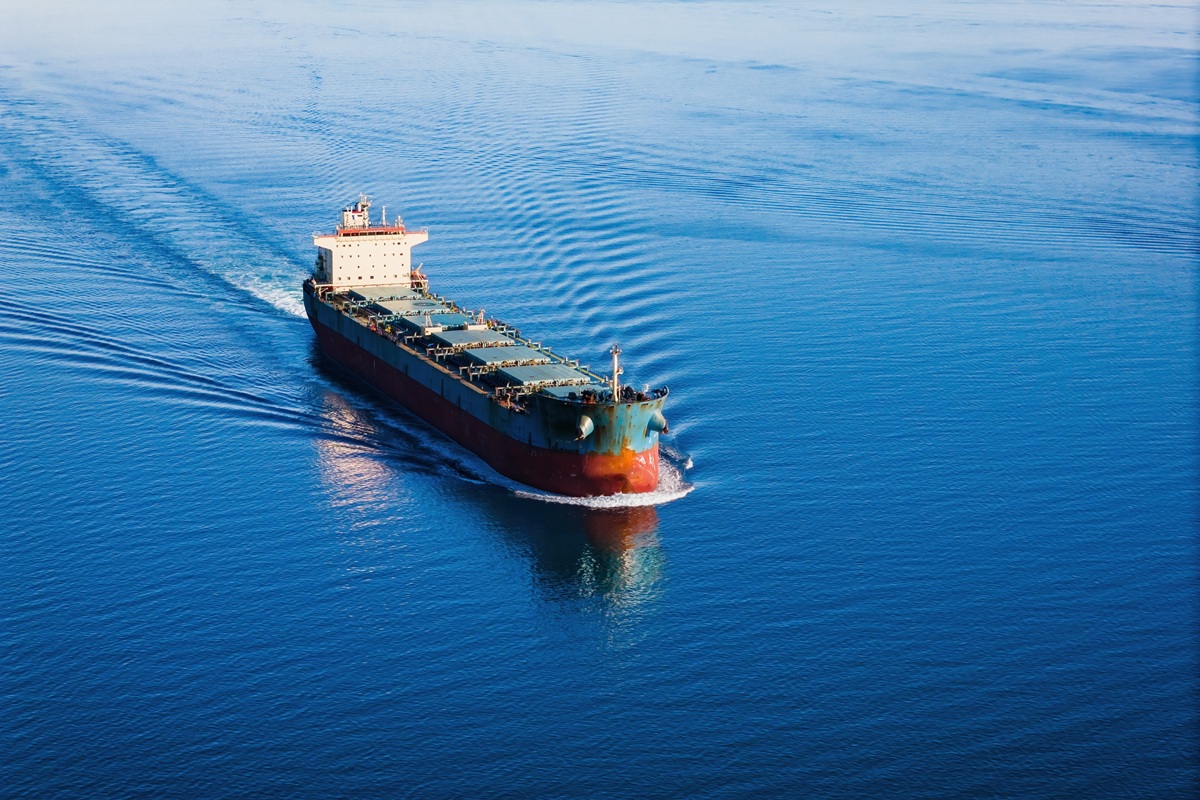
New Ballast Water Requirements at Bahia Ports
read more

Bahia Port Authority now requires ballast water audits and risk assessments for ships calling at Salvador, Aratu-Candeias, and Ilhéus. Non-compliance leads to operational delays and extra costs. Rules remain in force despite legal challenges
Update 29 July 2026: The National Agency of Waterway Transport (ANTAQ) has officially suspended the local ballast water requirements recently introduced by the Bahia State Dock Company (CODEBA).
Following formal administrative complaints submitted by shipowners’ associations (Centronave and ABAC), ANTAQ issued Deliberation-DG Nº 51-ANTAQ on 28 July 2026. The federal regulator granted an interlocutory injunction ordering CODEBA to immediately suspend Internal Standard NO.S8.14.GMAST.01. It determined that CODEBA’s regulations violate national legislation. This decision effectively halts local port-level prerequisites that conflicted with established federal and international maritime frameworks.
CODEBA has a 15-day deadline from notification to present its formal defence to ANTAQ. At the same time, the Directorate of Ports and Coasts (DPC) will review the local regulation, while ANTAQ superintendencies gather evidence on regulatory violations to prepare the case for a final, definitive board vote. ‘
On 16 June 2026, the federal government-controlled Companhia Docas do Estado da Bahia – CODEBA (Bahia State Dock Company) adopted, with immediate effect, Internal Standard NO.S8.14.GMAST.01 for monitoring and auditing of ballast water management across the public ports of Salvador, Aratu-Candeias, and Ilhéus, on Brazil’s northeastern coast. This measure does not replace regulatory obligations under the IMO “International Convention for the Control and Management of Ships’ Ballast Water and Sediments” (BWM Convention), or the newly updated Maritime Authority Standards for the Prevention of Environmental Pollution Caused by Ships and Platforms (NORMAM-401/DPC), issued by the Navy’s Directorate of Ports and Coasts (DPC). Instead, the new standard creates mandatory port-level environmental prerequisites for ships calling at CODEBA ports.
In addition to existing certification and inspection requirements under the BWM Convention, NORMAM-401/DPC, and the National Health Surveillance Agency (ANVISA)’s ship-port health regulations (Resolution RDC-72/2009), vessels calling at CODEBA-administered terminals are required to submit a Relatório de Gestão Ambiental Portuário da Água de Lastro – RGA‑BWM (Port Environmental Ballast Water Management Report) electronically via the Porto Sem Papel – PSP (Paperless Port) single-window system.
CODEBA utilises the RGA-BWM report to conduct independent documentary audits, environmental monitoring, and port-specific preventive risk assessments to control and prevent the introduction or spread of harmful aquatic organisms and pathogens. This local environmental vetting framework serves as a prerequisite for ship calls; it operates parallel to standard maritime protocols and is not intended to confer statutory maritime inspecting, policing, or international certification powers.
At a minimum, the RGA-BWM report must include the vessel’s identification, the responsible party, the accredited auditor’s ID, a summary of information analysed, the assigned risk classification, an evidence log, technical recommendations, the date/time of issuance, and an electronic signature. The report should not be construed as statutory certification, official approval, or international validation of the shipboard ballast water management system. The report must be uploaded, together with other mandatory documentation, to the PSP system at least 24 hours before the request for berthing. Failure to comply will be recorded as a monitoring pendency and may prevent completion of the vessel’s port clearance process.
Only independent corporate entities accredited by CODEBA may provide the audit and RGA-BWM services, which cannot be outsourced. These providers are prohibited from offering inspection, sampling, laboratory analysis, treatment services or other activities that could create a conflict of interest with their auditing role. Under the new standard, these providers must implement traceable, auditable IT systems (including AI and automated models where applicable), ensure data integrity, and comply with the Brazilian General Data Protection Law (LGPD). Although the Port Authority will maintain permanent supervision over accredited firms, it will not validate or endorse their technical conclusions or reports.
The contracting party (shipowner, operator, or charterer, through a shipping agent acting on their behalf) selects and pays the accredited company directly before applying for a berth. The Port Authority will not participate in price formulation, mediate commercial negotiations, or contract with auditors on the carrier’s behalf. Costs are treated as private operational expenses rather than port tariffs or public fees. All technical, analytical, operational, and remedial costs required to satisfy CODEBA’s environmental audits and risk assessments must be borne entirely by the ship interests. Currently, at least two companies are authorised by the Bahia Port Authority to issue RGA-BWM reports, with fees averaging approximately USD 2,000 per vessel per call.
CODEBA will apply a port-specific risk methodology (factoring in the ship’s provenance, the biogeographical origin of the ballast water, the management method, and compliance history) to assign risk categories: ‘Reduced’, ‘Moderate’, ‘Elevated’, or ‘Critical’. These classifications are for operational and monitoring purposes only and do not equate to BWM Convention compliance findings.
If the ship is flagged for a physical audit or high-risk classification based on its trading history and biogeographical voyage profile, the shipowner, operator, or charterer must cover all associated costs, including:
Failure to provide the RGA-BWM report prevents the completion of the vessel’s berthing scheduling process in the PSP system, blocking port operations until compliance is achieved. The absence of regular reporting is formally recorded and communicated to the relevant intervening authorities (ANTAQ, Maritime Authority, ANVISA, and other agencies, such as the Brazilian Institute of the Environment and Renewable Natural Resources – IBAMA).
Vessels classified as pending environmental monitoring may be subject to specific operational procedures and heightened scrutiny by the Port Authority. This may require the submission of additional documentation or clarifications, and failure to respond can result in further administrative actions.
While CODEBA’s new regulations are operational and administrative in nature, they do not constitute official sanctions, fines, or detentions under international conventions ratified by Brazil. Nevertheless, notification sent to other intervening authorities may result in regulatory actions within their respective jurisdictions.
Incidents of non-compliance are added to the vessel’s environmental history within CODEBA’s database, potentially influencing future risk assessments and operational requirements for subsequent calls.
Similarly to what happened in Santos, where the local port authority imposed additional ballast water management requirements (at an additional cost) beyond the BWM Convention and NORMAM-401/DPC mandates, Bahia Port Authority’s regulation faces legal opposition. The Bahia Shipping Agents’ Union, Sindinave, sought an injunction before the local federal court to suspend the new rules. The lower federal court denied the request, ruling that CODEBA holds concurrent authority to enforce port-level environmental preservation through automated triage AI systems as a valid material audit that preserves the Maritime Authority’s sanctioning power. Sindinave has appealed this ruling. Until the federal court of appeals eventually decides otherwise, the ballast water regulation remains fully active and operationally mandatory.
Key recommendations before calling at CODEBA-administered ports in Bahia:
Please read our Disclaimer.
Published 13 July 2026. Last updated 29 July 2026.
Related topics:
Rua Itororó, 3 - 3rd floor
11010-071 - Santos, SP - Brazil
Telephone +55 13 4009 9550
proinde@proinde.com.br
Rua Barão de Cotegipe, 443 - Sala 610 - 96200-290 - Rio Grande/RS - Brazil
Telephone +55 53 3233 1500
proinde.riogrande@proinde.com.br
Av. Rio Branco, 45 - sala 2402
20090-003 - Rio de Janeiro, RJ - Brazil
Telephone +55 21 2253 6145
proinde.rio@proinde.com.br
Rua Professor Elpidio Pimentel, 320 sala 401 - 29065-060 – Vitoria, ES – Brazil
Telephone: +55 27 3337 1178
proinde.vitoria@proinde.com.br
Rua Miguel Calmon, 19 - sala 702 - 40015-010 – Salvador, BA – Brazil
Telephone: +55 71 3242 3384
proinde.salvador@proinde.com.br
Av. Visconde de Jequitinhonha, 209 - sala 402 - 51021-190 - Recife, PE - Brazil
Telephone +55 81 3328 6414
proinde.recife@proinde.com.br
Rua Osvaldo Cruz, 01, Sala 1408
60125-150 – Fortaleza-CE – Brazil
Telephone +55 85 3099 4068
proinde.fortaleza@proinde.com.br
Rua dos Azulões, Sala 111 - Edifício Office Tower - 65075-060 - São Luis, MA - Brazil
Telephone +55 98 99101-2939
proinde.belem@proinde.com.br
Tv. Joaquim Furtado, Quadra 314, Lote 01, Sala 206 - 68447-000 – Barcarena, PA – Brazil
Telephone +55 91 99393 4252
proinde.belem@proinde.com.br
Av. Dr. Theomario Pinto da Costa, 811 - sala 204 - 69050-055 - Manaus, AM - Brazil
Telephone +55 92 3307-0653
proinde.manaus@proinde.com.br