New Ballast Water Requirements at Bahia Ports
read more

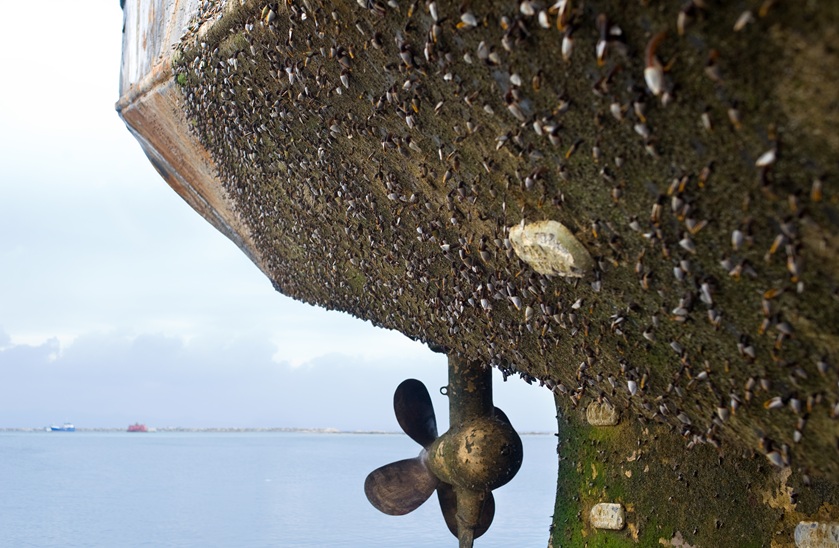
The Brazilian Navy has updated its regulations for controlling and managing ships’ biofouling to align with the 2023 IMO Biofouling Guidelines. All affected ships must comply promptly, and full enforcement, along with penalties for non-compliance, will come into effect on 1 February 2026
The Brazilian maritime authority, through the Navy’s Directorate of Ports and Coasts (DPC), is responsible for enforcing international conventions on the safeguarding of human life at sea, ensuring safe navigation and preventing pollution. The DPC regulates these areas in accordance with relevant IMO conventions and guidelines through a set of rules and standards known as “Normas da Autoridade Marítima” – NORMAM (maritime authority standards). These can be freely downloaded from the DPC website; however, the official versions are only available in Portuguese.
In 2005, in the wake of the IMO Ballast Water Convention adopted the previous year, the DPC published the first edition of the “Maritime Authority Standards for the Management of Ship Ballast Water”, then coded NORMAM-20/DPC. As the name implies, this standard specifically addresses issues related to shipboard ballast water. There were no maritime authority regulations specifically focused on marine pollution, and, at the same time, the management and control of biofouling on ships was governed by a separate regulation titled “Maritime Authority Standards for the Control of Anti-fouling Systems in Vessels”, coded NORMAM-23/DPC.
Eventually, in 2022, the DPC released a third edition of the NORMAM-20/DPC, renamed “Maritime Authority Standards on Water Pollution Caused by Vessels and Platforms and their Supporting Installations”. This update replaced NORMAM-23/DPC and incorporated its rules related to harmful anti-fouling systems.
In an attempt to make NORMAMs more user-friendly, the Navy reorganised its standards in 2023 into eight categories based on the subjects they cover. The issues previously regulated by NORMAM-20/DPC were consolidated into the 400 series (environmental matters), now rebranded as “Maritime Authority Standards for Prevention of Water Pollution Caused by Vessels and Platforms”, coded as NORMAM-401/DPC.
On 10 June 2025, the maritime authority issued Ordinance DPC/DGN/MB No. 180/2025, which introduced a new section to NORMAM-401/DPC, in addition to those addressing oil spills, ballast water management, and harmful anti-fouling systems. The newly added Chapter 4 focuses specifically on the management of biofouling on ships, including requirements for in-water hull cleaning and penalties and sanctions for non-compliance.
The purpose of the amendment is to align the maritime authority standards with the framework established by the IMO 2023 Biofouling Guidelines[1] to minimise the transfer of non-native aquatic species to the local ecosystem.
Under NORMAM-401/DPC, all ships over 24 metres in length, whether they are underway, anchored, or laid up within Brazilian jurisdictional waters, must adhere to the IMO biofouling regulations and guidelines.
These ships are required to maintain a Biofouling Management Plan (BFMP) and a Biofouling Record Book (BFRB) on board. They must document their compliance with the routines and procedures outlined in the BFMP, including inspections, dry docking, and in-water cleaning, as specified in the plan. Both the BFMP and the BFRB must be readily available for verification by the relevant local authorities.
The following categories of ships are exempt from the biofouling regulations:
Exempted vessels must still take measures to prevent the discharge of harmful residual substances into the environment[2].
The following circumstances allow for bypassing the procedures outlined in the regulations:
In the case of an exceptional situation, the local maritime authority must be promptly notified, either directly or through the shipping agent.
NORMAM-401/DPC defines three distinct marine biogeographic regions along the Brazilian coast. Figure 1

Southeast-South Biogeographic Region – the area stretching between the Maritime Basin of Espirito Santo (bounded to the north by the Mucuri River and to the south by the state line of Bahia) and the Maritime Basin of Pelotas (limited to the north by the Zone of Subtropical Convergence of the South Atlantic, at the parallel 28° South, until the border with the Uruguayan waters to the south)
Vessels over 24 meters in length that intend to enter Brazilian waters or navigate through different biogeographic regions must maintain a biofouling rating[3] equal to or lower than 1, which indicates no biofouling or only microfouling. Those found to have a biofouling rating of 2 or higher, indicating light to heavy macrofouling, must undergo cleaning before transit unless there are exceptional circumstances or the competent authority decides otherwise. Figure 2

Vessels with macrofouling must be cleaned, either in the water or in a dry dock, before navigating between distinct biogeographic regions. Reactive in-water cleaning of hulls and niche areas should only be performed with capture of waste substances, generally consisting of fouling organisms and anti-fouling coatings (AFC). This process requires prior approval from the relevant authorities.
For vessels longer than 24 metres, in-water cleaning can only be performed if it has been approved in advance by the local maritime authority. This approval must be sought through a specific request form provided in NORMAM-401/DPC, preferably at least 10 days prior to the planned operation or as soon as possible. If the proposed cleaning operation is to take place within port limits, including anchorages, prior permission must also be obtained from the local port authority.
The request for in-water cleaning must be submitted to the local maritime authority through the In-Water Cleaning Request Form and should include the following documents:
Unless otherwise expressly permitted by the environmental authority, cleaning the hull and niche areas of a ship in the water without capture for fouling rated 2 or above is prohibited. Similarly, any in-water cleaning in ecologically sensitive areas and conservation units is not allowed. Copies of the applicable cleaning permits must be submitted to the local maritime authority.
NORMAM-401/DPC outlines penalties based on relevant environmental legislation. Fines for transporting and releasing substances harmful to the environment can reach up to BRL 2 million. However, if the pollution poses a risk to human health, causes the death of animals, or significantly harms biodiversity, fines can escalate to BRL 50 million, in addition to potential criminal and civil sanctions.
Penalties may be increased up to three times for repeat offences or doubled if another environmental violation occurs within five years of the first infraction[4].
Offenders have the right to present an administrative defence before the local maritime authority and can also file administrative appeals with the Directorate of Ports and Coasts (DPC).
The requirements for prior in-water cleaning permits from the relevant authorities took effect on 17 June 2025, when Ordinance DPC/DGN/MB No. 180/2025 was published in the Official Gazette. Full enforcement of the new regulation, including penalties and sanctions for non-compliance, is scheduled to commence on 1 February 2026. The maritime authority encourages all relevant stakeholders to take advantage of the grace period to adapt to the new routines and procedures.
Ship operators, masters and crews should be familiar with and adhere to the 2023 Biofouling Guidelines. They must fully implement the ship-specific Biofouling Management Plan (BFMP) and maintain an up-to-date Biofouling Record Book (BFRB), which should include detailed records of inspection, cleaning and maintenance activities undertaken.
Additionally, they should also be aware of any extra requirements set by local authorities, such as those specified in NORMAM-401/DPC, and the need to obtain prior permits for ship cleaning services in Brazilian waters.
Currently, it is unclear how the maritime authority plans to monitor and enforce biofouling rating limits on ships navigation across Brazil’s extensive coastline, as well as how long requests for in-water cleaning permits will take to be processed. Likewise, there is uncertainty regarding the potential penalties that may be imposed. In determining the amount of any fines, not only will the severity of the offence and the offender’s background be considered, but also the offender’s economic situation.
Overall, it is still too early to evaluate the impact that the implementation of the new regulation will have on the daily operations of ships in Brazilian ports.
Please read our disclaimer.
[1] IMO Resolution MEPC.378(80): 2023 Guidelines for the Control and Management of Ships’ Bifouling to Minimise the Transfer of Invasive Aquatic Species
[2] NORMAM-401/DPC includes in its ‘Annexe G’ a guide to good practices for biofouling management aimed at owners and/or operators of craft less than 24 meters in length (Guidance for Ships Less than 24 Meters in Length)
[3] According to IMO 2023 Biofouling Guidelines’ definition, “fouling rating is the allocation of a number for a defined inspection area of the ship surface based on a visual assessment, including description of biofouling present and percentage of macrofouling coverage”
[4] Articles 61 & 64 of Decree 6,514/20008 (regulates environmental infractions and administrative sanctions, establishes federal administrative proceeding for investigating these infractions); Chapter 4.5 of NORMAM-401/DPC
Related topics:
Rua Itororó, 3 - 3rd floor
11010-071 - Santos, SP - Brazil
Telephone +55 13 4009 9550
proinde@proinde.com.br
Rua Barão de Cotegipe, 443 - Sala 610 - 96200-290 - Rio Grande/RS - Brazil
Telephone +55 53 3233 1500
proinde.riogrande@proinde.com.br
Av. Rio Branco, 45 - sala 2402
20090-003 - Rio de Janeiro, RJ - Brazil
Telephone +55 21 2253 6145
proinde.rio@proinde.com.br
Rua Professor Elpidio Pimentel, 320 sala 401 - 29065-060 – Vitoria, ES – Brazil
Telephone: +55 27 3337 1178
proinde.vitoria@proinde.com.br
Rua Miguel Calmon, 19 - sala 702 - 40015-010 – Salvador, BA – Brazil
Telephone: +55 71 3242 3384
proinde.salvador@proinde.com.br
Av. Visconde de Jequitinhonha, 209 - sala 402 - 51021-190 - Recife, PE - Brazil
Telephone +55 81 3328 6414
proinde.recife@proinde.com.br
Rua Osvaldo Cruz, 01, Sala 1408
60125-150 – Fortaleza-CE – Brazil
Telephone +55 85 3099 4068
proinde.fortaleza@proinde.com.br
Rua dos Azulões, Sala 111 - Edifício Office Tower - 65075-060 - São Luis, MA - Brazil
Telephone +55 98 99101-2939
proinde.belem@proinde.com.br
Tv. Joaquim Furtado, Quadra 314, Lote 01, Sala 206 - 68447-000 – Barcarena, PA – Brazil
Telephone +55 91 99393 4252
proinde.belem@proinde.com.br
Av. Dr. Theomario Pinto da Costa, 811 - sala 204 - 69050-055 - Manaus, AM - Brazil
Telephone +55 92 3307-0653
proinde.manaus@proinde.com.br