
New Ballast Water Requirements at Bahia Ports
read more

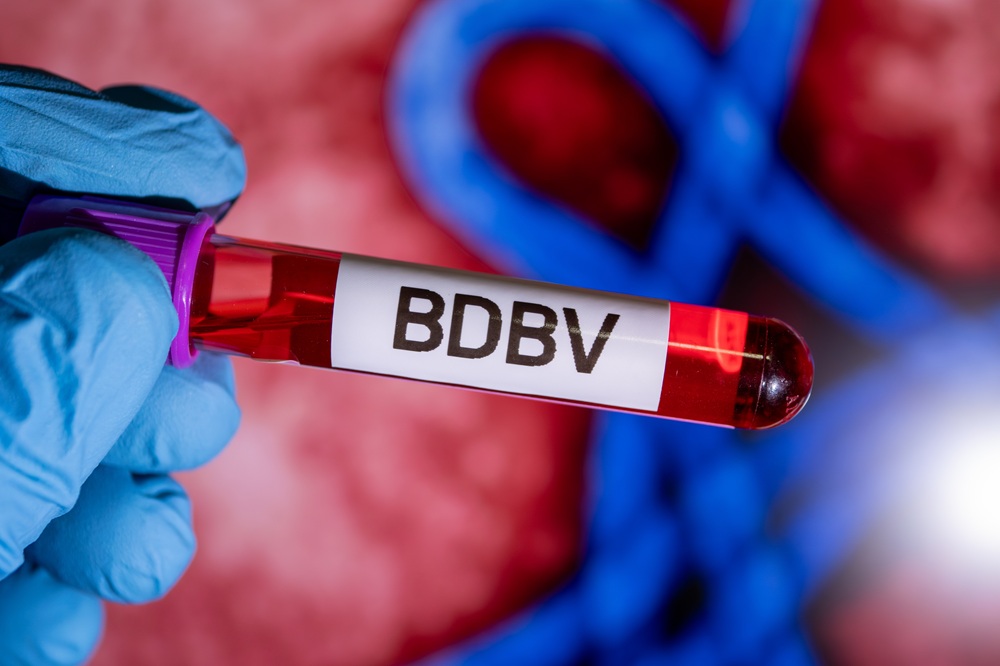
Although the World Health Organisation has declared the current Ebola outbreak in the DR Congo and Uganda a Public Health Emergency of International Concern (PHEIC), federal health authorities assess the risk of transmission to Brazil as low. Nevertheless, epidemiological surveillance at international ports and airports has been heightened
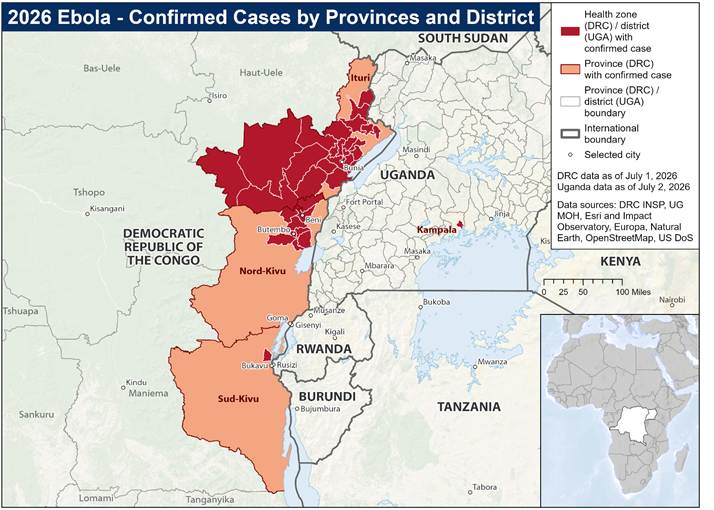
The index case emerged in late April 2026 in a mining zone within the Ituri province in the Democratic Republic of the Congo (DRC). Initial detection gaps allowed the virus to spread undetected for several weeks. Regional armed conflict has displaced over 100,000 people, severely hindering contact tracing and localised containment efforts. The virus has since crossed borders into additional DRC provinces and neighbouring Uganda.
The current outbreak is driven by the Bundibugyo Ebola virus (BDBV), which has a case fatality rate between 30% and 50% – historically lower than that of the Zaire ebolavirus strain. There are currently no approved vaccines or specific therapeutic treatments available for BDBV. The incubation period ranges from 2 to 21 days. Viral transmission occurs only after symptom onset, via direct contact with infected blood, bodily fluids, or contaminated surfaces.
In May 2026, the World Health Organisation (WHO) formally declared the BDBV outbreak a Public Health Emergency of International Concern (PHEIC). The WHO explicitly clarified that the situation does not meet the criteria for a global pandemic emergency. International borders remain open, with no widespread travel bans in place.
Federal and state health authorities consider the risk to Brazil as low. Nonetheless, the Brazilian National Health Surveillance Agency (ANVISA), the federal port health authority, has issued Normative Instruction IN 448/2026 in alignment with Technical Note 26/2026/SEI/COVIG/GGPAF/DIRE5/ANVISA. These instruments update the mandatory temporary health measures across all national ports, airports and land border crossings.
Ebola is classified as a notifiable disease in Brazil. Under federal laws, any suspected case must be reported immediately – defined strictly as within 24 hours – to the local ANVISA headquarters and the Centre for Strategic Health Surveillance (CIEVS) through the vessel’s local agents.
Shipmasters must apply the following criteria from the National Contingency Plan to identify suspected cases:
In accordance with ANVISA’s IN 448/2026, Technical Note 26/2026, and Collegiate Board Resolution RDC 932/2024, vessels arriving from abroad must adhere to the following operational recommendations:
Detailed international updates can be found on the official WHO Ebola Portal.
Please read our disclaimer.
Related Topics:
Rua Itororó, 3 - 3rd floor
11010-071 - Santos, SP - Brazil
Telephone +55 13 4009 9550
proinde@proinde.com.br
Rua Barão de Cotegipe, 443 - Sala 610 - 96200-290 - Rio Grande/RS - Brazil
Telephone +55 53 3233 1500
proinde.riogrande@proinde.com.br
Av. Rio Branco, 45 - sala 2402
20090-003 - Rio de Janeiro, RJ - Brazil
Telephone +55 21 2253 6145
proinde.rio@proinde.com.br
Rua Professor Elpidio Pimentel, 320 sala 401 - 29065-060 – Vitoria, ES – Brazil
Telephone: +55 27 3337 1178
proinde.vitoria@proinde.com.br
Rua Miguel Calmon, 19 - sala 702 - 40015-010 – Salvador, BA – Brazil
Telephone: +55 71 3242 3384
proinde.salvador@proinde.com.br
Av. Visconde de Jequitinhonha, 209 - sala 402 - 51021-190 - Recife, PE - Brazil
Telephone +55 81 3328 6414
proinde.recife@proinde.com.br
Rua Osvaldo Cruz, 01, Sala 1408
60125-150 – Fortaleza-CE – Brazil
Telephone +55 85 3099 4068
proinde.fortaleza@proinde.com.br
Rua dos Azulões, Sala 111 - Edifício Office Tower - 65075-060 - São Luis, MA - Brazil
Telephone +55 98 99101-2939
proinde.belem@proinde.com.br
Tv. Joaquim Furtado, Quadra 314, Lote 01, Sala 206 - 68447-000 – Barcarena, PA – Brazil
Telephone +55 91 99393 4252
proinde.belem@proinde.com.br
Av. Dr. Theomario Pinto da Costa, 811 - sala 204 - 69050-055 - Manaus, AM - Brazil
Telephone +55 92 3307-0653
proinde.manaus@proinde.com.br