Northern Arc: Draft Increases and New Safety ...
read more

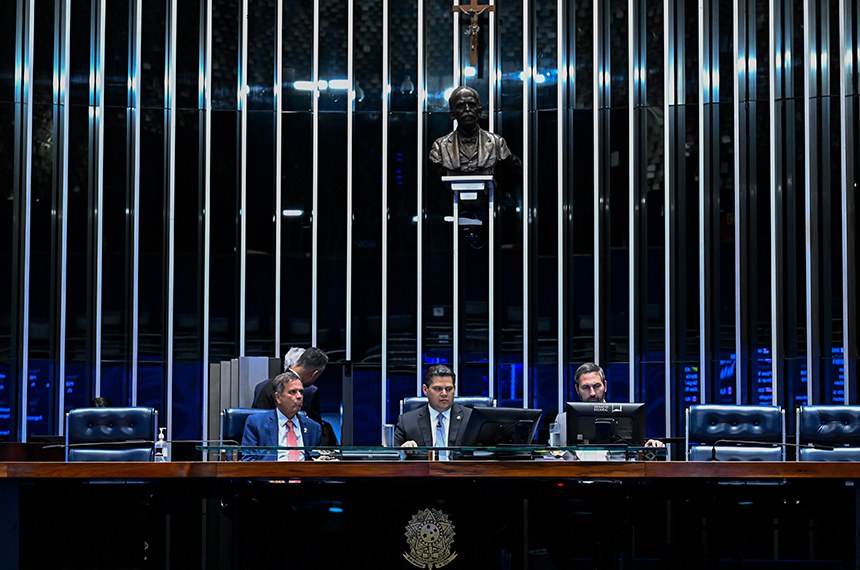
The text of the amended CLC 1992 Protocol has been ratified by the upper house of the National Congress and is now awaiting formal legislative promulgation
Following approval by the Chamber of Deputies in November 2025, the Federal Senate officially ratified Brazil’s adherence to a stricter international compensation regime during a plenary session held last week. The text corresponds to the 1992 Protocol to the International Convention on Civil Liability for Oil Pollution Damage, 1969 (CLC), alongside its 2000 Amendments. This updated framework has been adopted by around 144 member states of the International Maritime Organisation (IMO), covering more than 97% of the world’s seagoing tonnage.
As the legislative proposal (PDL 167/2025) has now successfully passed both houses of the National Congress, it moves to formal promulgation by the president. This step will allow the Brazilian government to formally deposit the instrument of ratification with the IMO. The updated liability regime will officially come into force in the country 12 months afterwards.
Brazil initially ratified the original 1969 CLC in 1977 and implemented it domestically in 1979. Despite this obsolete IMO treaty remaining technically active for over three decades, there are no precedent cases before Brazilian high courts in which tanker owners responsible for oil pollution have successfully limited their liability based on the 1969 rules. Domestic courts consistently uphold the strict, full-reparation principle enshrined in the 1988 Federal Constitution.
While the 1969 CLC possesses similar conceptual features to the newer framework, it caps a shipowner’s strict liability at only 14 million Special Drawing Rights (SDR), or roughly US$18.9 million, and strictly limits geographical coverage to spills occurring within the 12-nautical-mile territorial sea. Brazil’s formal shift to the CLC 1992 regime will yield significant structural updates, including:
The exact liability limits and key legal differences between the CLC 1969 and the 1992 CLC Protocol – including its subsequent 2000 Amendments – are compared in the table below.
| Feature | CLC 1969 | CLC 1992 (Original Protocol) | CLC 1992 (As Amended in 2000) |
| Small ships base limit | No minimum tier (calculated strictly by tonnage) | 3 million SDR for ships up to 5,000 GT | 4.51 million SDR for ships up to 5,000 GT |
| Linear scale rate | 133 SDR per ton | Base + 420 SDR per ton over 5,000 GT | Base + 631 SDR per ton over 5,000 GT |
| Liability cap | 14 million SDR | 59.7 million SDR | 89.77 million SDR (for ships over 140,000 GT) |
| Entry into force | 19 June 1975 | 30 May 1996 | 1 November 2003 |
| Vessel applicability | Laden tankers only (actual bulk cargo carried) | Both laden and unladen tankers (covering ballast voyages and unladen bunker spills) | |
| Geographical scope | Territorial sea (up to 12 nautical miles) | Exclusive Economic Zone (EEZ) (up to 200 nautical miles) | |
| Threat remediation | Only if oil actually escapes | Allows recovery for preventive measures taken during grave, imminent threats, even if no spill occurs | |
| Conduct barring limitation | Actual fault or privity | Requires proof of a personal act or omission committed intentionally or recklessly with knowledge that damage would probably result | |
| Channelling of liability | Protects only servants and agents from direct claims | Explicitly bars claims against pilots, charterers, managers, operators, or salvors to consolidate all claims against the registered owner’s insurer | |
Industry stakeholders, such as shipowners and P&I insurers, generally welcome the clarity and predictability provided by the updated liability regime and insurance requirements. Environmental groups have also expressed strong support, anticipating significantly improved compensation mechanisms in the event of major ecological disasters.
Ultimately, aligning with the CLC 1992 framework brings Brazil into the modern era of marine environmental protection. By replacing the obsolete CLC 1969 with globally accepted, higher-liability ceilings, the nation establishes a robust economic buffer against the catastrophic costs of oil pollution. Many of the current 31 remaining contracting states to the 1969 convention are developing countries, landlocked states, or island states with smaller commercial fleets. This long-awaited legislative milestone paves a clear pathway towards future international fund integrations, ensuring a comprehensive financial remedy remains available for future maritime incidents.
Looking ahead, the coming months will see the official deposit of ratification with the IMO. The country’s next steps –potentially including accession to the IOPC Funds – will further shape its role in the global framework of marine environmental responsibility.
Please read our disclaimer.
Related topics:
Rua Itororó, 3 - 3rd floor
11010-071 - Santos, SP - Brazil
Telephone +55 13 4009 9550
proinde@proinde.com.br
Rua Barão de Cotegipe, 443 - Sala 610 - 96200-290 - Rio Grande/RS - Brazil
Telephone +55 53 3233 1500
proinde.riogrande@proinde.com.br
Av. Rio Branco, 45 - sala 2402
20090-003 - Rio de Janeiro, RJ - Brazil
Telephone +55 21 2253 6145
proinde.rio@proinde.com.br
Rua Professor Elpidio Pimentel, 320 sala 401 - 29065-060 – Vitoria, ES – Brazil
Telephone: +55 27 3337 1178
proinde.vitoria@proinde.com.br
Rua Miguel Calmon, 19 - sala 702 - 40015-010 – Salvador, BA – Brazil
Telephone: +55 71 3242 3384
proinde.salvador@proinde.com.br
Av. Visconde de Jequitinhonha, 209 - sala 402 - 51021-190 - Recife, PE - Brazil
Telephone +55 81 3328 6414
proinde.recife@proinde.com.br
Rua Osvaldo Cruz, 01, Sala 1408
60125-150 – Fortaleza-CE – Brazil
Telephone +55 85 3099 4068
proinde.fortaleza@proinde.com.br
Rua dos Azulões, Sala 111 - Edifício Office Tower - 65075-060 - São Luis, MA - Brazil
Telephone +55 98 99101-2939
proinde.belem@proinde.com.br
Tv. Joaquim Furtado, Quadra 314, Lote 01, Sala 206 - 68447-000 – Barcarena, PA – Brazil
Telephone +55 91 99393 4252
proinde.belem@proinde.com.br
Av. Dr. Theomario Pinto da Costa, 811 - sala 204 - 69050-055 - Manaus, AM - Brazil
Telephone +55 92 3307-0653
proinde.manaus@proinde.com.br