Northern Arc: Draft Increases and New Safety ...
read more

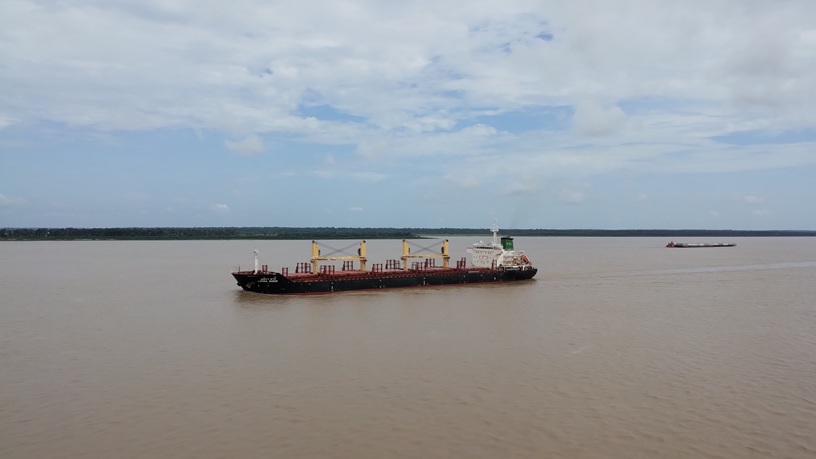
Over the last decade, ports along the North and Northeast coasts have consistently increased their share of global grain exports. In 2025, the throughput of the so-called Northern Arc ports surpassed that of the traditional Paranaguá-Antonina port complex in the south, marking a historic shift in Brazilian grain logistics
The Arco Norte (Northern Arc) broadly refers to a strategic group of ports located north of the 16°S parallel. Key grain-exporting hubs within this network include:
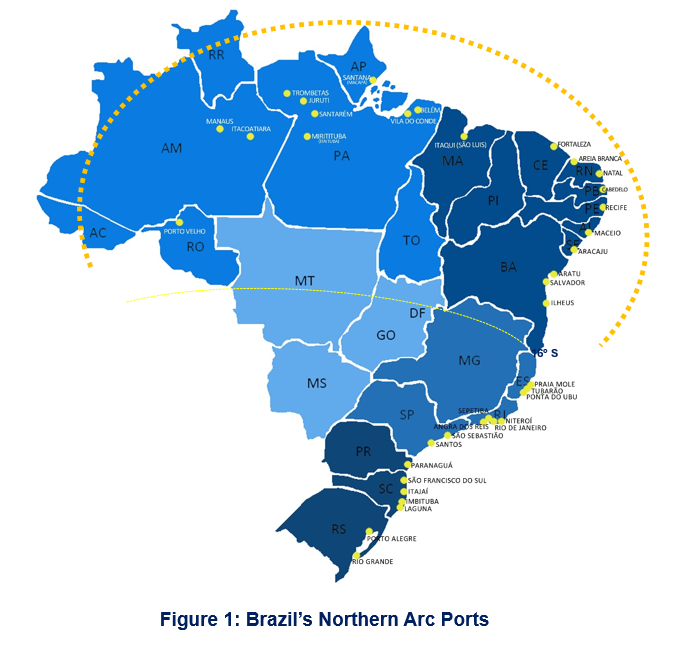
Over the past decade, the Northern Arc’s ports have become vital for Brazilian soya bean and maize (corn) exports due to their proximity to the Centre-West Region and Matopiba producing regions. By using these ports, exporters benefit from lower inland costs and improved multimodal logistics.
According to the 2026 Agrilogistics Yearbook recently released by the National Supply Company (Conab):
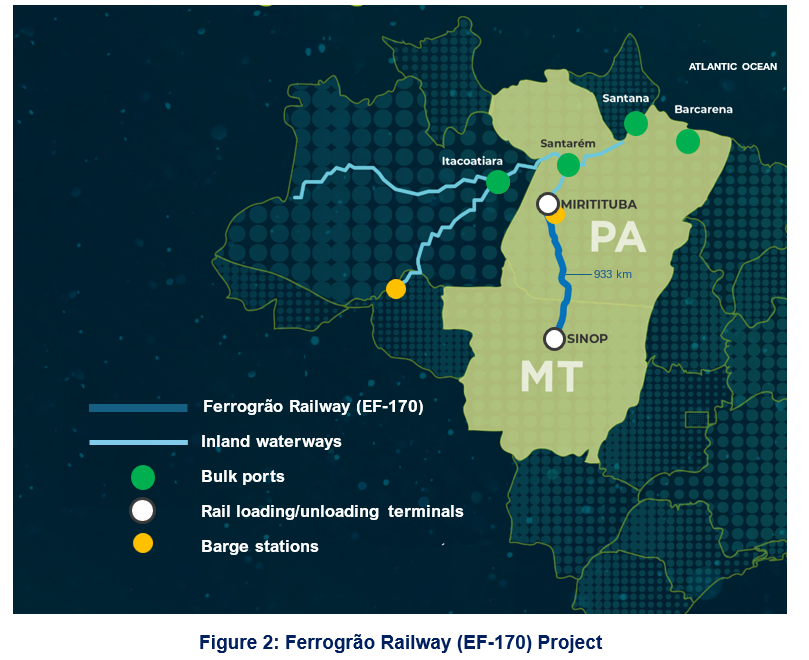
The expansion of the Northern Arc’s ports is closely linked to the development of the Ferrovia Norte-Sul – EF-151 (North-South Railway), moving massive volumes of grains (soya beans and maize) from inland producing centres to the Port of Itaqui, and the optimisation of inland waterways. Rivers, such as the Tapajós-Teles Pires, Madeira, and Solimões-Amazonas, allow for efficient downstream barging of grains to riverside terminals in Santarém, Itacoatiara, and the recently opened Novo Remanso terminal.
Beyond reducing transport distances, these ports enable “backhauling”—the practice of using return freight to transport fertilisers and other agricultural inputs back to the inland farms, further lowering costs and fuelling record-breaking harvests.
The ‘Matopiba’ region (comprising the northeastern states of Maranhão, Tocantins, Piauí, and Bahia) has been the primary beneficiary of this shift. In 2025, over 70% of Matopiba’s soya bean exports and nearly all of its maize exports were shipped via Itaqui. This shift has significantly reduced logistics bottlenecks and export lead times compared to tradition grain ports in the South and Southeast, such as Santos, Paranaguá, and Rio Grande.
A cornerstone of future planning is the railway EF-170, known as ‘Ferrogrão’ (Grain Railway). This 933-kilometre-long stretch is designed to link the grain-producing hub of Sinop in Mato Grosso (MT) to Miritituba cargo transhipment stations on the Tapajós River in Pará (PA). From there, grains are barged downstream to Amazonian ports for export to Europe and Asia. The Ferrogrão aims to drastically cut transportation costs for grains, fertilisers, and general cargo, while diverting heavy traffic from the congested and often potholed BR-163 highway. (Figure 2)
While the Supreme Federal Court (STF) recently validated laws permitting construction through certain protected areas within the Amazon, the project faces significant obstacles. The federal environmental agency, IBAMA, requires updated environmental impact studies, and the project meets strong opposition from indigenous people and environmentalists. Given these environmental and legal controversies, the construction is unlikely to commence in the near future.
Despite significant progress, the Northern Arc ports face operational hurdles. These include seasonal droughts in the Amazon that can restrict navigation in the second half of the year and a deficit in storage and handling facilities.
This logistics gap leads to a ‘just-in-time’ approach that relies, relying on direct barge-to-ship transhipments. Without a buffer, even small stoppages – such as rain during loading or the need to occasionally remove cargo that does not meet quality standards – can cause delays across the river system. Storing grain in barges in hot and humid conditions, especially during the wet season, also increases the risk of excessive moisture and can lower the final quality of the cargo.
The consolidation of the Northern Arc as a major grain-export and fertiliser-import corridor has diversified Brazil’s trade routes and reduced reliance on southern ports. Continued investment in storage capacity and multimodal integration is essential for Brazil to maintain its global leadership in the grain trade.
Please read our disclaimer.
Related topics:
Rua Itororó, 3 - 3rd floor
11010-071 - Santos, SP - Brazil
Telephone +55 13 4009 9550
proinde@proinde.com.br
Rua Barão de Cotegipe, 443 - Sala 610 - 96200-290 - Rio Grande/RS - Brazil
Telephone +55 53 3233 1500
proinde.riogrande@proinde.com.br
Av. Rio Branco, 45 - sala 2402
20090-003 - Rio de Janeiro, RJ - Brazil
Telephone +55 21 2253 6145
proinde.rio@proinde.com.br
Rua Professor Elpidio Pimentel, 320 sala 401 - 29065-060 – Vitoria, ES – Brazil
Telephone: +55 27 3337 1178
proinde.vitoria@proinde.com.br
Rua Miguel Calmon, 19 - sala 702 - 40015-010 – Salvador, BA – Brazil
Telephone: +55 71 3242 3384
proinde.salvador@proinde.com.br
Av. Visconde de Jequitinhonha, 209 - sala 402 - 51021-190 - Recife, PE - Brazil
Telephone +55 81 3328 6414
proinde.recife@proinde.com.br
Rua Osvaldo Cruz, 01, Sala 1408
60125-150 – Fortaleza-CE – Brazil
Telephone +55 85 3099 4068
proinde.fortaleza@proinde.com.br
Rua dos Azulões, Sala 111 - Edifício Office Tower - 65075-060 - São Luis, MA - Brazil
Telephone +55 98 99101-2939
proinde.belem@proinde.com.br
Tv. Joaquim Furtado, Quadra 314, Lote 01, Sala 206 - 68447-000 – Barcarena, PA – Brazil
Telephone +55 91 99393 4252
proinde.belem@proinde.com.br
Av. Dr. Theomario Pinto da Costa, 811 - sala 204 - 69050-055 - Manaus, AM - Brazil
Telephone +55 92 3307-0653
proinde.manaus@proinde.com.br